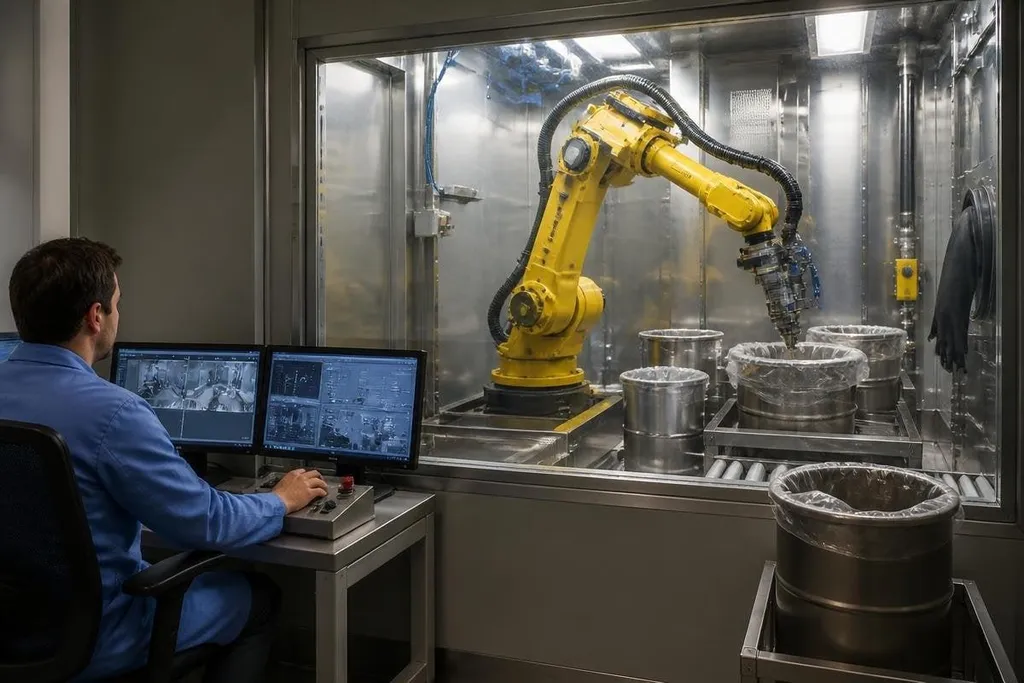
Inside a sealed cell, a robot handling toxic material may work under remote control, or with both methods joined together. The machine keeps people away from the material while sensors, barriers, and waste systems control the work around it.
- Sealed cells: Keep vapors and dust inside a controlled work area
- Remote handling: Move tools without placing a worker beside the material
- Waste control: Send used gloves, parts, and containers through a planned route
The robot starts with isolation
The first layer is the room around the robot. A sealed cell uses walls, doors, viewing windows, and controlled airflow to keep contaminated air from moving into nearby work areas.
Negative pressure means the cell pulls air inward when a door seal leaks. Filters then remove particles from the exhaust air. The exact filter type depends on the material, since a dust hazard needs a different control plan from a corrosive vapor.
Clean-assembly machines may fail quickly beside acid, solvent, or radioactive waste. Seals cover joints, cables run through protected paths, and exposed parts use materials that can tolerate the chemical.
Remote control keeps people away
A remote operator may guide the robot from outside the cell through cameras, sensors, and control software. The operator sees the work area on screens and sends movement commands to the arm or mobile platform.
This setup matters when a task could expose a person through a leak, splash, dust cloud, or damaged container. The robot can pick up a drum, turn a valve, place a sample in a shielded box, or move waste to a sealed transfer point without putting hands into the work area.
Some tasks need direct control because the work is unfamiliar or changes from one container to the next. Repeated work can use programmed motion, but the system still needs a safe stop, clear camera views, and a way to recover a dropped object.
For named machines and test details, reports on robots handling toxic materials can show how sensor limits shape the safe stop before the next section checks the work area.
Sensors watch the work area
Cameras show position and motion, but they don't tell an operator everything about a toxic material. Extra sensors may check temperature, pressure, gas levels, radiation, or the condition of a container.
A sensor reading can stop the robot or trigger an alarm when conditions move outside the set range. The control system needs clear rules for those events. A warning that appears on one screen while the robot continues moving is a poor safety plan.
The robot also needs position feedback. Force sensing can show that a gripper has touched a valve or container. That helps the operator use enough force to move the part without crushing it, though sensing does not remove the need for barriers and procedures.
The waste route matters as much as the robot
A task can be safe at the gripper and still fail at the exit. Used tools, damaged containers, filters, and protective covers all need a route out of the cell that keeps the material contained.
Transfer ports, sealed bags, shielded containers, and wash-down areas may form part of that route. The right setup depends on the material and the amount handled.
The machine cannot fix a waste process that leaves contaminated parts on an open bench.
Maintenance creates another exposure point. Workers may need to change a gripper, clean a camera window, replace a seal, or remove a failed motor. The cell needs a clear way to check contamination before anyone opens it.
A practical buying checklist
Before choosing a robot for toxic-material work, check these points:
- Name the hazard: List the chemical, dust, vapor, radiation source, or biological material involved.
- Set the reach: Measure the cell, container height, tool position, and required payload.
- Check the surfaces: Confirm that seals, cables, joints, and gripper materials suit the task.
- Plan failure recovery: Decide how staff will remove a dropped item or failed robot.
- Test the waste path: Follow every used tool, filter, container, and protective cover to its final bin.
- Write the maintenance step: Set the inspection, cleaning, contamination check, and part-change process before work starts.
I'd choose a slower robot with clear failure handling over a faster arm that leaves maintenance staff guessing.
The open question for many projects is not whether a robot can move the material. It is whether the full cell, sensor plan, waste route, and maintenance process keep working after the first fault.